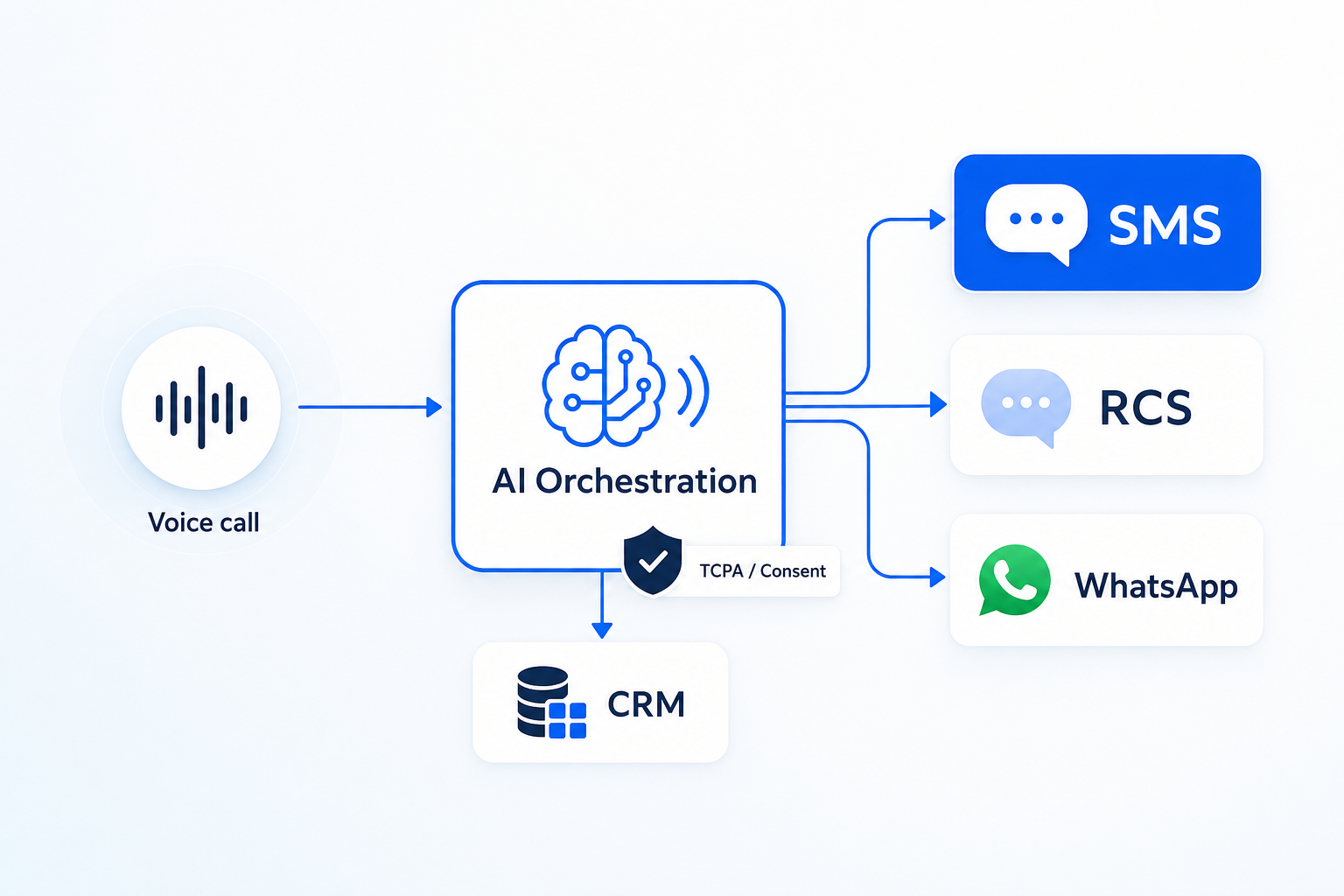
The most overlooked SMS compliance risk happens after opt-in TextConvo helps teams manage compliant AI SMS engagement at scale.
“Did we get consent?” is the question most business owners and marketers ask first—and for good reason. But the most overlooked SMS compliance risk isn’t whether a customer opted in. It’s what happens next: how you send, what you send, how you store proof, and how quickly you honor opt-outs.
Post–opt-in mistakes tend to be subtle, operational, and repeatable at scale. That’s what makes them risky: one broken workflow can impact thousands of messages before anyone notices.
This article outlines the post–opt-in compliance gaps that most teams miss and provides a practical checklist you can apply to your SMS program.
Important note: This is practical guidance, not legal advice. Regulations and carrier rules evolve, and your counsel should review your specific program.
Why “after consent” is where SMS compliance breaks down
Once you’ve collected an opt-in, SMS becomes an operational discipline. The legal and carrier expectations don’t stop at “yes.” They extend into day-to-day execution:
- Message content and identification (who is texting and why)
- Frequency and timing controls
- Opt-out processing (immediate, universal, and auditable)
- Recordkeeping (proof of consent and policy acceptance)
- Data handling (number reassignment, retention, and access)
In other words, the most overlooked SMS compliance risk is operational drift—where your real-world sending behavior gradually diverges from what you promised at opt-in.
Post–opt-in compliance risks most teams miss
1) Opt-out handling that’s slow, inconsistent, or incomplete
Many programs technically support “STOP,” but the workflow fails in one of these ways:
- The opt-out only applies to a single campaign, not all messages.
- Replies like “unsubscribe,” “cancel,” or “end” aren’t recognized.
- Opt-outs require manual processing (and get delayed).
- A customer opts out, then gets re-imported and messaged again.
Actionable takeaways:
- Ensure opt-outs are immediate and automatically applied across the entire account or brand.
- Standardize how you treat common opt-out keywords and edge cases.
- Build a re-import safeguard so suppressed numbers stay suppressed.
2) Inadequate identification and disclosures in ongoing messages
At opt-in, you may clearly state who you are and what the customer will receive. But after opt-in, teams often send messages that are vague or look like spam.
Common pitfalls include:
- Not consistently using a recognizable brand name.
- Sending messages that don’t match the promised purpose (e.g., marketing content sent to a service-only list).
- Forgetting the basics: how to get help and how to opt out.
Actionable takeaways:
- Maintain consistent brand identification in templates (especially for new subscribers).
- Keep marketing, transactional, and informational use cases separated—or clearly disclosed.
- Include “Reply STOP to opt out” and “Reply HELP for help” where appropriate for your program and message type.
3) Frequency creep (a quiet but serious compliance and trust problem)
You might disclose “up to 4 msgs/month,” but operationally you run:
- a weekly promotion,
- a cart reminder,
- an event push,
- plus customer service follow-ups.
Even if each individual message feels reasonable, the combined program can exceed what you disclosed or what customers reasonably expected.
Actionable takeaways:
- Set a program-level frequency policy (not just per-campaign).
- Use send throttles and global caps per subscriber.
- Audit actual sends against the language used at opt-in.
4) Poor recordkeeping: you can’t prove what you did (or didn’t) do
Consent is only helpful if you can demonstrate:
- When and how the customer opted in
- The exact disclosure language they saw
- The source (web form, keyword, checkout, paper form)
- Any changes over time (versioning)
The post–opt-in compliance risk here is that your team treats consent as a one-time checkbox—without maintaining evidence.
Actionable takeaways:
- Log opt-in metadata (timestamp, source, IP/device where applicable, form version, keyword).
- Store proof in a consistent place accessible for audits.
- Create a simple “consent receipt” view for each subscriber.
5) Messaging people who no longer own the number (reassigned numbers)
Phone numbers get recycled. If your database is old, you may text someone who never opted in—even if the prior owner did.
Actionable takeaways:
- Regularly revalidate lists and suppress inactive contacts.
- Be cautious with long-dormant lists and “win-back” blasts.
- Consider workflows that confirm identity for higher-risk use cases.
6) Third-party, agency, or franchise sending without centralized rules
Many SMS compliance failures happen when:
- multiple locations text from different tools,
- agencies upload lists without proper suppression,
- sales teams use personal phones for outreach.
The “after opt-in” risk becomes a governance issue.
Actionable takeaways:
- Centralize sending under one policy and one system of record.
- Use roles/permissions, approved templates, and audit logs.
- Require a single suppression list shared across all teams.
A practical post–opt-in SMS compliance checklist
Use this checklist to reduce the most overlooked SMS compliance risk—what happens after consent.
Program governance
- Define message categories: marketing, transactional, informational, support.
- Map each category to the opt-in language that authorizes it.
- Document owners: who can create campaigns, approve templates, and export lists.
Sending controls
- Enforce quiet hours aligned with your audience and risk tolerance.
- Apply frequency caps at the subscriber level.
- Use segmentation so customers only receive relevant messages.
Content standards
- Include brand identification in templates.
- Keep links consistent (and avoid sketchy shorteners if possible).
- Align every message with the opt-in promise (purpose + frequency).
Opt-out & help flows
- Confirm STOP processing works for common variants (STOP, UNSUBSCRIBE, END, CANCEL).
- Ensure opt-outs apply globally (not just per campaign).
- Track opt-out events and the subsequent suppression status.
Data & recordkeeping
- Store opt-in event details and disclosure language version.
- Maintain a change log for consent language updates.
- Keep audit logs of sends, edits, imports, and user actions.
Ongoing monitoring
- Review complaints, carrier flags, and deliverability shifts.
- Run monthly audits comparing actual sends vs. disclosed frequency.
- Test opt-out flows quarterly (including re-import scenarios).
How to operationalize compliance without slowing marketing down
Compliance programs fail when they rely on heroics (one person “remembering the rules”). They work when they’re built into the workflow.
Here are a few practical ways to make post–opt-in compliance repeatable:
- Use pre-approved templates: Reduce ad hoc messaging and enforce standard disclosures.
- Automate suppression: Let the system handle opt-outs and prevent accidental resends.
- Create a campaign QA step: A lightweight checklist before any send (audience source, purpose, frequency, opt-out line, link check).
- Separate lists by permission level: Don’t mix marketing subscribers with support-only contacts.
Conclusion: Consent opens the door—your operations keep you compliant
Ready to make SMS compliance repeatable? Book a demo with TextConvo to see automated opt-outs, suppression, and audit-ready logs in action—or get started in minutes at https://textconvo.com.
If you’re putting most of your energy into opt-in language but not into the day-to-day mechanics of sending, you’re exposed. The most overlooked SMS compliance risk is what happens after consent: inconsistent opt-outs, frequency creep, weak recordkeeping, and fragmented sending across teams.
Treat compliance as an operational system—one that’s monitored, logged, and enforced automatically—and you’ll reduce risk while delivering a better customer experience.
See how TextConvo can help — visit textconvo.com to get started.
Tags