TextConvo orchestrates real-time customer conversations across SMS, email, and voice AI — compliant by default.
In real revenue workflows, the call is just one moment in a longer conversation: a lead misses the call, asks for a link, needs a reminder later, or wants to finish in text while commuting. If your stack treats voice and SMS as separate tools, you’ll end up with broken handoffs, duplicate outreach, compliance risk, and fuzzy attribution.
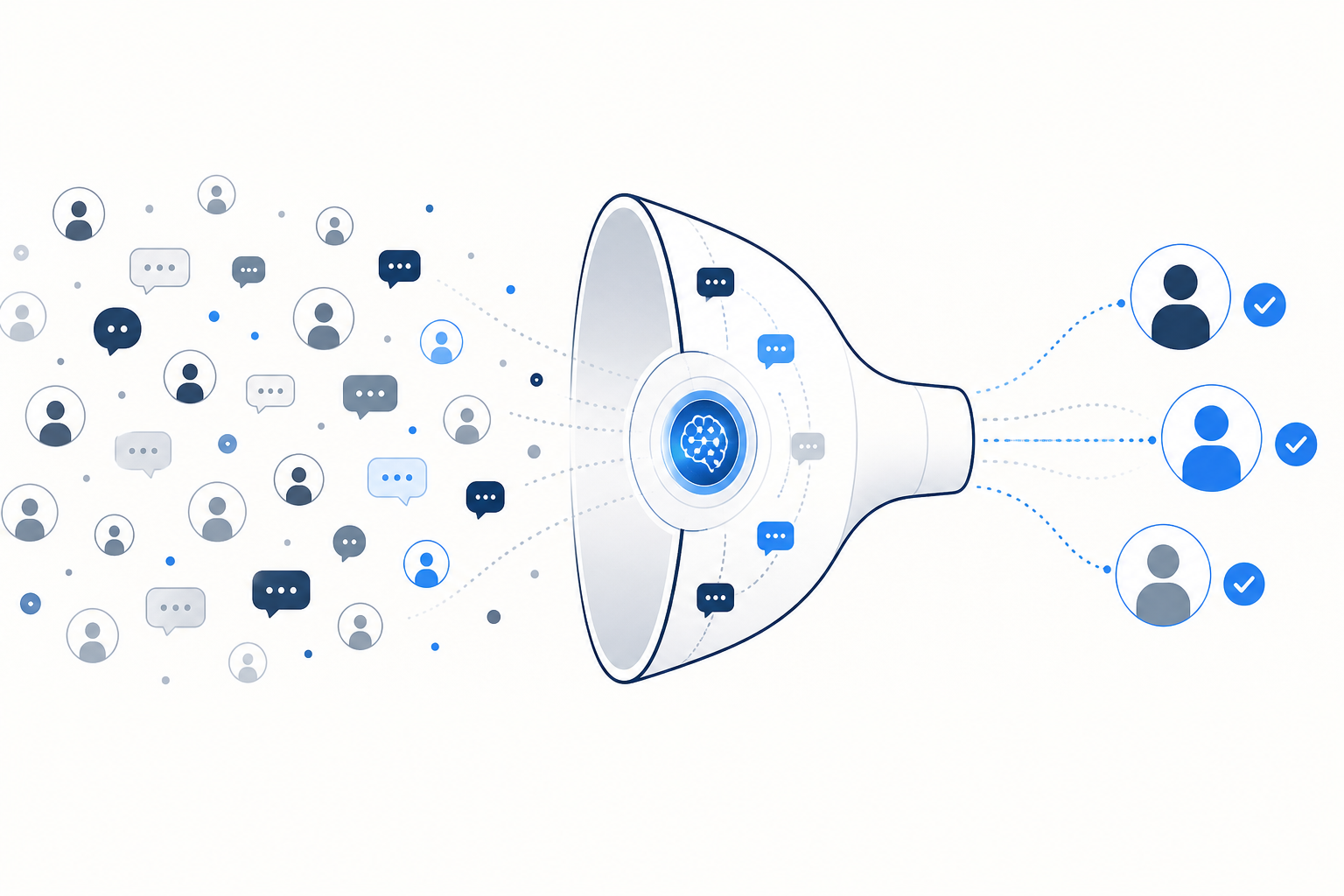
At TextConvo, we see the best teams move from “voice dialer + SMS bolt-on” to AI orchestration: a signal-based approach that decides when to call, when to text, when to wait, and what to say next—while maintaining shared memory, consent, and CRM truth. This guide is a practical 2026 buyer checklist to help you evaluate vendors and avoid expensive re-platforming.
What “AI voice agent with SMS follow-up” means in 2026 (and what it doesn’t)
A decade ago, “follow-up” meant sending a generic text after a missed call. In 2026, buyers expect something more specific:
An AI voice agent with SMS follow-up should be able to:
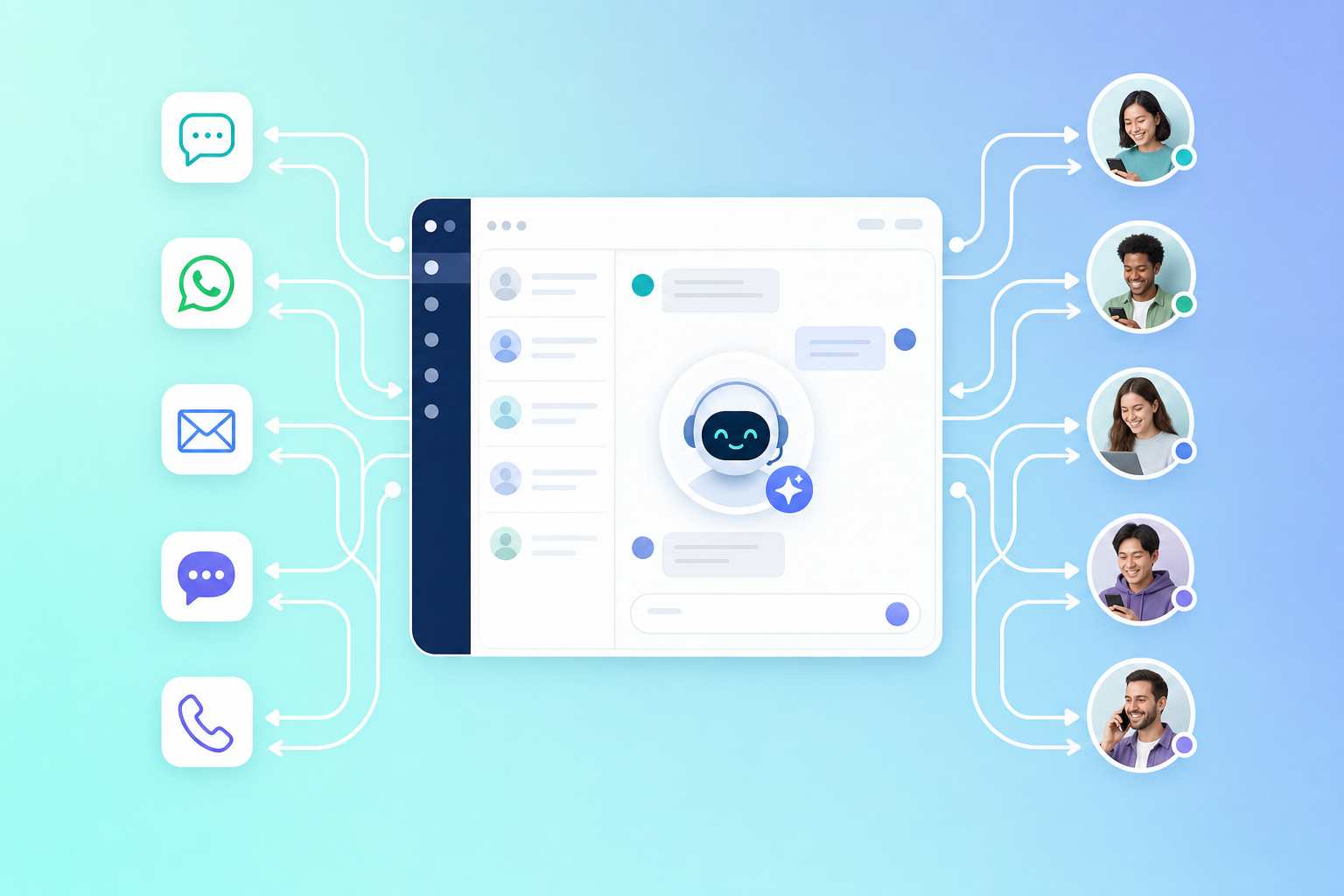
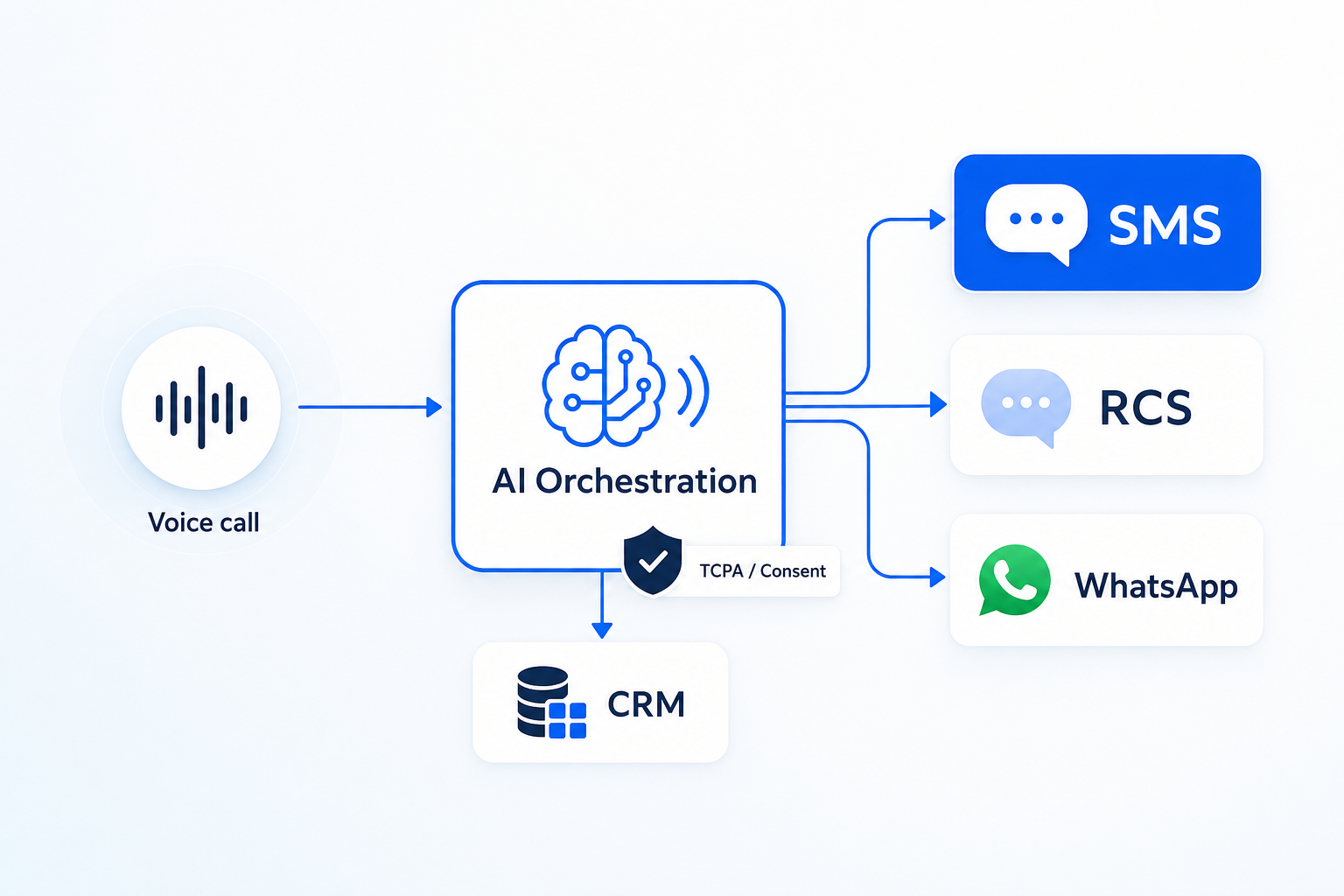
- Continue the same conversation across channels (voice → SMS/RCS/WhatsApp/email) without losing context
- Switch channels mid-journey based on user signals (no answer, voicemail, “text me,” background noise, language preference)
- Preserve shared memory (what the customer said, what was promised, next steps)
- Track consent across the entire journey (call + text) with enforceable rules
- Write back to your CRM with structured outcomes, not just call transcripts
What it shouldn’t be:
- A voice platform that can “send a text” via a third-party integration but can’t maintain context
- A separate SMS tool that triggers after calls but doesn’t understand what happened on the call
- A demo that looks impressive but can’t handle silence, interruptions, and real-world edge cases
If you’re shortlisting vendors, start with the architecture questions below—then use our side-by-side pages for Thoughtly, Retell, Vapi, PolyAI, and Verse. Those pages cover feature diffs; this checklist covers what demos usually skip: Who owns the conversation state? Who owns consent? Who owns routing decisions?
The 2026 buyer checklist: 10 must-have capabilities
Use this checklist to score any vendor claiming to be the “best AI voice agent with SMS follow-up.” The goal is to identify whether they’re delivering multi-channel orchestration or simply stitching channels together.
1) Shared memory across voice and SMS (true conversation state)
The #1 failure mode: the voice agent and SMS system each maintain their own “memory,” leading to contradictions.
What to validate:
- Does the platform store a single customer conversation timeline that includes call turns, text messages, dispositions, and promised actions?
- Can the SMS follow-up reference specifics? Example: “I can send that financing link we discussed—do you want it here?”
- Can you control what memory is persisted (PII boundaries, retention, redaction)?
Practical test:
- Have the agent quote an appointment time on a call.
- Then request: “Text me the details.”
- Confirm the SMS includes the correct time, location/link, and next step—without manual mapping.
2) Mid-journey channel switching (not just “after the call”)
A modern journey often requires switching channels during the interaction.
Look for:
- Automatic switch to SMS when:
- The customer says “I’m at work—text me.”
- The customer is driving (noise patterns / interruptions)
- The call drops
- The customer is silent after a question
- Ability to resume in voice later (“Want me to call you back at 3pm?”)
- A routing layer that chooses SMS vs RCS vs WhatsApp vs email based on consent and deliverability
Red flag:
- “We can send an SMS at the end of the call” but the voice agent can’t initiate a channel change with the right context.
3) Silence handling and real-world call control
Silence is not a corner case—it’s the default. People multitask, get distracted, or are wary of unknown calls.
Evaluate:
- What happens after 3 seconds of silence? After 10 seconds?
- Can the agent offer an SMS alternative: “No worries—should I text you a quick summary and link?”
- Does it detect voicemail and handle it differently?
- Can it schedule a follow-up text that references the call attempt (“Tried calling—want to finish by text?”)
Practical test script:
- Say “Hello” and then stay silent.
- Interrupt the agent mid-sentence.
- Ask a question, then pause.
- Confirm the agent doesn’t loop awkwardly—and that SMS follow-up is helpful, not spammy.
4) Intent capture that drives the next best action
Voice is great for discovery; SMS is great for completion. Your platform should treat the call as a signal generator.
Ask:
- Does the system extract structured outcomes (intent, stage, objections, budget, timeline)?
- Can those outcomes automatically trigger the right SMS template with personalization?
- Can it branch based on outcomes (“qualified” vs “needs nurture” vs “wrong number”)?
Example outcomes → follow-up actions:
- Qualified → text calendar link + confirm preferred time window
- Needs info → text spec sheet + ask one qualifying question
- No answer → text short value prop + “reply 1 for call back”
5) TCPA and consent across call + text (universal rules, not channel silos)
Compliance is where “bolt-ons” break.
In 2026, you should assume:
- Phone numbers change hands
- Consent status varies by channel (voice permission ≠ SMS permission)
- Regulators expect auditable records
Your checklist:
- Can the platform maintain consent status per person per channel (call, SMS/RCS, WhatsApp, email)?
- Is there universal opt-out enforcement across channels?
- Can you prove why a message was sent (source, timestamp, form, keyword, call recording reference)?
- Can it throttle outreach based on quiet hours/time zones?
Red flag:
- “We support opt-out keywords” without centralized enforcement across voice + messaging.
If compliance is a top concern, talk to vendors about consent tracking design early; retrofitting it later is expensive.
6) CRM writeback that sales teams actually trust
A transcript is not a CRM update.
To be useful, your AI voice agent with SMS follow-up should write back:
- Lead status (qualified/unqualified)
- Next step (appointment scheduled, needs docs, call back time)
- Contact preference (text only / call only)
- Conversation summary in a consistent schema
- Links sent (and whether they were clicked, if tracked)
Practical questions:
- Is writeback real-time?
- Can you map fields without engineering?
- Can you push both activity logs and field updates?
This is where orchestration platforms tend to outperform point solutions—because the AI Decision Engine and messaging layer are designed to feed CRM truth.
7) Delivery and channel strategy: SMS vs RCS vs WhatsApp
If your “SMS follow-up” strategy is only SMS, you’re already behind.
What to evaluate:
- Can the platform orchestrate across SMS, RCS, WhatsApp, email, and voice AI based on deliverability and consent?
- Does it support rich content when available (RCS cards, verified sender, quick replies)?
- Can it degrade gracefully to SMS when RCS isn’t supported?
Your buyers’ reality: people respond where it’s easiest. Your system should meet them there.
8) Identity resolution and deduplication
Follow-up fails when you contact the same person as three records.
Checklist:
- Can the platform unify conversations across:
- multiple phone numbers
- multiple leads/accounts
- spouse/household scenarios (where appropriate)
- Can it detect duplicates and suppress redundant outreach?
9) Analytics that connect voice outcomes to revenue
Ask for reporting that answers:
- What % of calls resulted in an SMS follow-up?
- Which follow-up path produced the highest booking rate?
- How long from first attempt to conversion (speed to lead)?
- Where do people drop (silence, objections, link click but no reply)?
Red flag:
- Dashboards that report “calls handled” and “texts sent” but don’t connect the journey.
10) Build and iteration velocity (non-technical teams included)
In 2026, your playbook changes monthly. Your system should support:
- Fast editing of prompts, flows, and message content
- Safe testing (A/B, sandbox numbers, guardrails)
- Version control / approvals
- Clear escalation paths to humans
If it takes weeks to change a follow-up message or consent rule, you’ll lose momentum.
A practical scoring framework: how to compare vendors without getting lost in demos
Demos are optimized for “wow.” Your evaluation should be optimized for operational reality.
Here’s a simple way to score platforms (1–5 each). Total out of 25.
- Conversation continuity (shared memory + channel switching)
- Compliance architecture (consent, opt-out, auditability)
- Outcome automation (intent → next best action across channels)
- CRM reliability (writeback quality + field mapping)
- Iteration speed (how fast your team can improve the system)
Suggested proof-of-concept scenarios (steal these)
Run these scenarios across your top 2–3 vendors and compare results side-by-side:
-
Missed call → SMS rescue
- Customer doesn’t answer.
- System sends a short text with a clear CTA.
- Customer replies “tomorrow.”
- System schedules a call and confirms by text.
-
On-call request → link delivery
- Customer says “Text me the quote.”
- System sends the right link, personalized.
- System confirms receipt and asks one qualifying question.
-
Silence and interruptions
- Customer is silent after pricing.
- Customer interrupts twice.
- System offers to continue in text, then resumes smoothly.
-
Consent edge case
- Customer opts out by SMS.
- Vendor must suppress future texts and respect routing rules in voice follow-ups.
The goal isn’t perfection—it’s to see which architecture fails gracefully.
How to use this checklist with vendor comparisons
Use the 10 capabilities above to score any stack. Then deep-dive the closest alternatives:
- Thoughtly (voice + SMS orchestration) → TextConvo vs Thoughtly
- Retell (voice-first agents) → TextConvo vs Retell
- Vapi (developer voice stack) → TextConvo vs Vapi
- PolyAI (enterprise voice) → TextConvo vs PolyAI
- Verse (managed SMS lead engagement) → TextConvo vs Verse
Rule of thumb: if a vendor wins the demo voice but fails shared memory, mid-journey SMS switching, or cross-channel consent, it’s still a bolt-on—not orchestration.
Why orchestration beats “voice + SMS bolt-on” for revenue teams
Most stacks break because they’re built like this:
- Voice vendor owns the call
- SMS vendor owns the text
- CRM owns the record
- Your team owns the headache
Orchestration flips it:
- The platform owns the conversation state and decisioning
- Channels (voice/SMS/RCS/WhatsApp/email) become execution paths
- Your CRM stays the system of record, fed by consistent outcomes
TextConvo is built for this approach: signal-based AI that listens for events (no answer, intent detected, consent updated, appointment requested) and triggers the next best step in the right channel—without losing context.
If you’re exploring what “good” looks like beyond a single channel tool, start with our platform overview and Voice AI pages.
Common buying mistakes (and how to avoid them)
Mistake 1: Treating SMS follow-up as a template problem
If you’re only evaluating message templates, you’ll miss the harder part: when to send, to whom, and based on what signals.
Fix: Ask vendors to show the decision logic and the conversation state that drives follow-up.
Mistake 2: Ignoring consent until legal gets involved
Teams often add consent rules after rollout—right when volume increases.
Fix: Require a consent and auditability walkthrough in the first vendor call.
Mistake 3: Optimizing for a “human-like voice” instead of outcomes
A natural voice matters—but not at the expense of control, safety, and conversion.
Fix: Score the system on booking rate, response rate, speed to lead, and operational reliability.
Mistake 4: Underestimating how often journeys leave voice
In many industries, the close happens in text: links, confirmations, reminders, document collection.
Fix: Design the journey as voice + messaging, not “voice first, SMS later.”
For industry-specific journeys, see lead-gen agencies, mortgage, and insurance.
Frequently Asked Questions
FAQ 1: What’s the difference between an AI voice agent and an IVR?
An IVR routes calls through fixed menus (“Press 1 for…”). An AI voice agent can handle natural language, capture intent, and take actions—like scheduling, qualification, and triggering SMS follow-up—based on what the customer says and does.
FAQ 2: Does “SMS follow-up” also include RCS and WhatsApp?
It should. In 2026, “SMS follow-up” is often shorthand for post-call messaging. The best systems can choose between SMS, RCS, WhatsApp, or email based on consent, device support, and the customer’s preference.
FAQ 3: How do I test shared memory across voice and SMS during evaluation?
Use a two-step test: (1) during the call, ask for a specific next step (time, link, document). (2) request it via text and confirm the message includes the exact detail without manual intervention. Then reply with a change (“Make it 4pm instead”) and confirm the system updates the plan consistently.
FAQ 4: What compliance features matter most for call + text journeys?
Prioritize centralized consent tracking, universal opt-out across channels, audit logs showing why outreach occurred, quiet-hour controls, and clear suppression rules. Make sure these rules apply across both voice and messaging—not just in one channel.
FAQ 5: Can an AI voice agent with SMS follow-up replace human reps?
In many workflows, it replaces the repetitive parts: initial outreach, qualification, FAQs, scheduling, reminders, and simple updates. Most teams still keep humans for complex objections, edge cases, and high-value conversations—ideally with clean handoff and full context.
Conclusion: Buy the conversation system, not the channel feature
The “best AI voice agent with SMS follow-up” in 2026 isn’t the one with the flashiest demo voice. It’s the one that treats voice and messaging as one continuous, compliant, measurable customer conversation—powered by orchestration, shared memory, and real decisioning.
If you’re building a multi-channel journey that can call, text, and adapt in real time—while keeping CRM truth and consent intact—TextConvo was designed for that.
Want to see voice + SMS orchestration on a real lead path? Book a demo · Compare TextConvo vs Thoughtly
🚀 See TextConvo in action
- 👉 Explore our Product
- 👉 View real Use Cases
- 👉 Contact us to get started
Tags