SMS is no longer just “a channel” — for many small businesses, it’s the most reliable way to get a time-sensitive message seen and acted on. The difference in 2026 is that SMS marketing for small business has matured: customers expect relevance, regulators expect proof of consent, and your team expects automation that doesn’t create extra work. Platforms like TextConvo make it practical to run compliant, conversational campaigns without needing an enterprise marketing ops team.
This guide is built for owners and marketers who want SMS to drive appointments, repeat purchases, and faster lead response—while staying on the right side of compliance.
Why SMS Marketing for Small Business Still Wins in 2026
Small businesses don’t need more “reach.” You need more response—and you need it quickly.
Here’s what’s changed (and what hasn’t) in the messaging industry:
- Channel changes: More brands are using SMS, so inbox competition is higher. Generic blasts get ignored faster.
- Market shifts: Customers are comfortable transacting via text (booking, rescheduling, paying links, quick questions), but they’re less tolerant of spam.
- Regulatory evolution: Consent and opt-out handling aren’t optional “best practices.” They’re foundational to sustainable SMS programs.
- Practical implication: The winners are using conversational SMS and SMS automation to keep messages relevant and timely.
For small businesses, this translates into a simple advantage: when your SMS program is permission-based and operationally tight, you can move faster than larger competitors.
What “Good” SMS Marketing Looks Like in 2026
If you’re evaluating your program (or starting from scratch), aim for these 2026 standards:
1) It’s permission-based and documented
“Sure, they gave me their number” isn’t enough. You need an opt-in process that’s clear, trackable, and provable.
2) It’s segmented, not one-size-fits-all
The fastest way to burn trust is sending the same offer to everyone. Even lightweight segmentation improves results:
- New leads vs. existing customers
- Recent buyers vs. lapsed customers
- Appointment-based customers vs. walk-in customers
- Location-based segments (if you have multiple sites)
3) It’s conversational, not campaign-only
The most profitable SMS programs aren’t only promos—they’re two-way:
- “Reply 1 to confirm, 2 to reschedule”
- “What size are you looking for?”
- “Want help choosing a plan?”
This is where AI SMS and conversational routing can reduce staff workload while improving speed to lead.
4) It fits your operations
A small business doesn’t have time for constant manual texting. You need automation that triggers from real events:
- Form submissions
- Missed calls
- Appointment changes
- Delivery/pickup readiness
- Membership renewal windows
If you want to see what this looks like in practice, explore our SMS automation platform and map the workflows to your day-to-day operations.
SMS Compliance in 2026: The Non-Negotiables (Without Legal Jargon)
Let’s keep this practical. If you’re doing SMS marketing for small business, your program should have four compliance “muscles.”
1) Clear opt-in (and consent tracking)
Your opt-in needs to be explicit, not implied. Examples of compliant opt-in methods:
- Web form checkbox with SMS disclosure language
- Text-to-join keyword (e.g., “Text DEALS to 55555”)
- Point-of-sale capture with a written disclosure
Operational tip: Store who opted in, when, and how. If you ever need to audit your program, this is the difference between confidence and panic.
2) Simple, reliable opt-out
Opt-out is not a “nice-to-have.” Every program needs:
- A clear way to stop messages (commonly “Reply STOP”)
- Immediate suppression when a user opts out
- A process for handling “HELP” or support requests
3) Message identity and expectations
Set expectations upfront:
- Who is texting (business name)
- What types of messages they’ll get (promos, appointment reminders, order updates)
- How often (roughly)
This reduces complaints and improves long-term list quality.
4) Quiet hours and frequency control
Even if you’re not sending at scale, timing matters. Build guardrails:
- Avoid early/late sends
- Cap sends per week by segment
- Use triggers (behavior) more than blasts (calendar)
Actionable takeaway: Write a one-page “SMS policy” for your business that covers opt-in language, opt-out handling, sending hours, and who has access. It’s quick—and it prevents expensive mistakes.
Building Your SMS List (Ethically) in a Small Business Environment
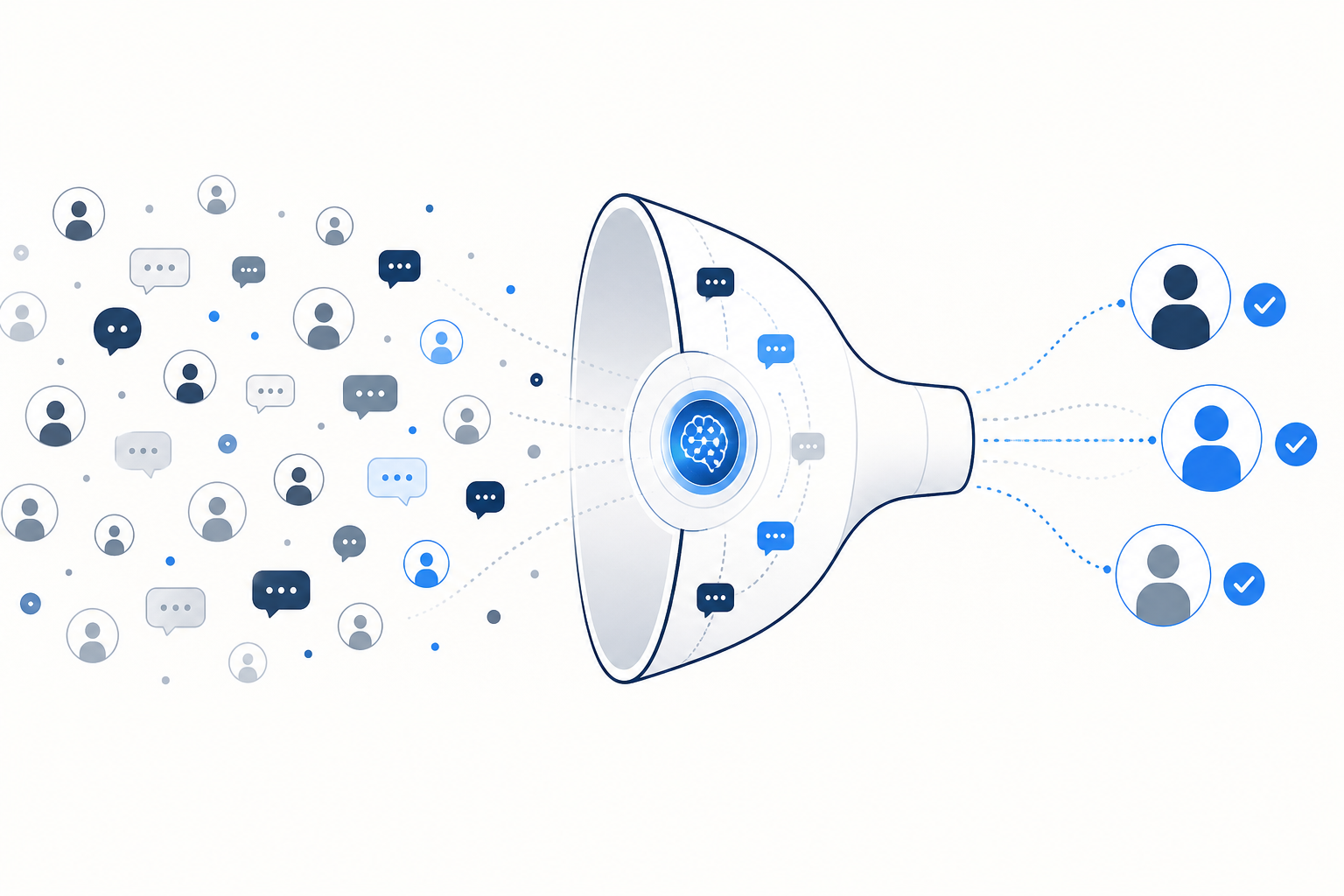
List growth is where most small businesses either win big or get blocked by poor practices. The goal is to build a list of people who want to hear from you.
High-intent opt-in moments to use
These are the moments when customers are most likely to consent:
- At checkout (in-store or online): “Want receipt + VIP deals by text?”
- Booking an appointment: “Get reminders and rescheduling by text.”
- After a service visit: “Get maintenance tips and priority scheduling.”
- During lead capture: “Text is the fastest way to reach you—OK to message?”
Opt-in copy templates you can adapt
Keep it clear and human:
- “By checking this box, you agree to receive recurring automated promotional and personalized marketing text messages from [Business Name] at the number provided. Consent is not a condition of purchase. Reply STOP to opt out.”
- “Text JOIN to receive appointment reminders and occasional offers. Msg & data rates may apply. Reply STOP to cancel.”
What not to do (even if you’ve seen others do it)
- Buying lists
- Uploading numbers without a valid opt-in
- Hiding disclosures in tiny font
Those shortcuts create deliverability problems and reputational damage that small businesses can’t afford.
SMS Campaigns That Actually Work: 2026 Playbooks by Goal
Most small businesses need SMS to do three things: capture demand, convert it faster, and retain customers.
Playbook A: Speed-to-lead for inquiries (lead response + lead qualification)
If you’re running ads or collecting web leads, SMS is your fastest follow-up layer.
Trigger: Form submission, chat request, or missed call
Message flow (example):
- “Hi {{first_name}}, this is {{agent_name}} at {{business}}. Thanks for reaching out—what can I help with today?”
- “To point you in the right direction, are you looking for (1) {{option_a}} or (2) {{option_b}}?”
- “Great—what’s the best day/time for a quick call or visit?”
Why it works in 2026: Customers expect immediate response, and a simple branching conversation can qualify leads without a sales rep typing the same questions repeatedly.
Playbook B: Appointments that don’t no-show
Appointments are a margin game. Reducing no-shows is one of the highest ROI SMS uses for local businesses.
Trigger: Appointment created
Sequence:
- Confirmation right away
- Reminder 24 hours before
- Reminder 2–3 hours before with a confirm/reschedule option
Micro-optimization: Add a frictionless reschedule path. People are more likely to reschedule than ghost.
Playbook C: Lapsed customer reactivation
This is where many small businesses waste money with broad discounts. Instead, use relevance:
Trigger: No purchase/visit in X days
Segments to create:
- High-value customers
- Recent first-time customers
- Customers who bought a specific category
Message examples:
- “We haven’t seen you in a bit—want us to hold your usual {{item}} for pickup this week? Reply YES.”
- “Quick question: are you still looking for help with {{service}}? If so, I can send a couple openings.”
Need inspiration for industry-specific flows? Check out our real-world use cases to see how teams structure SMS for different customer journeys.
SMS Automation and Conversational AI: Where Small Teams Gain Leverage
Automation isn’t about removing the human touch—it’s about using it where it counts.
What to automate (and what to keep human)
Great for automation:
- First response to new leads
- FAQs (hours, location, pricing ranges)
- Appointment confirmations and reminders
- Basic routing (“sales vs. support”)
- Consent capture and opt-out handling
Keep human (or escalate quickly):
- Complex objections
- High-value sales conversations
- Service recovery and complaints
Practical automation building blocks
When evaluating tools and building workflows, look for:
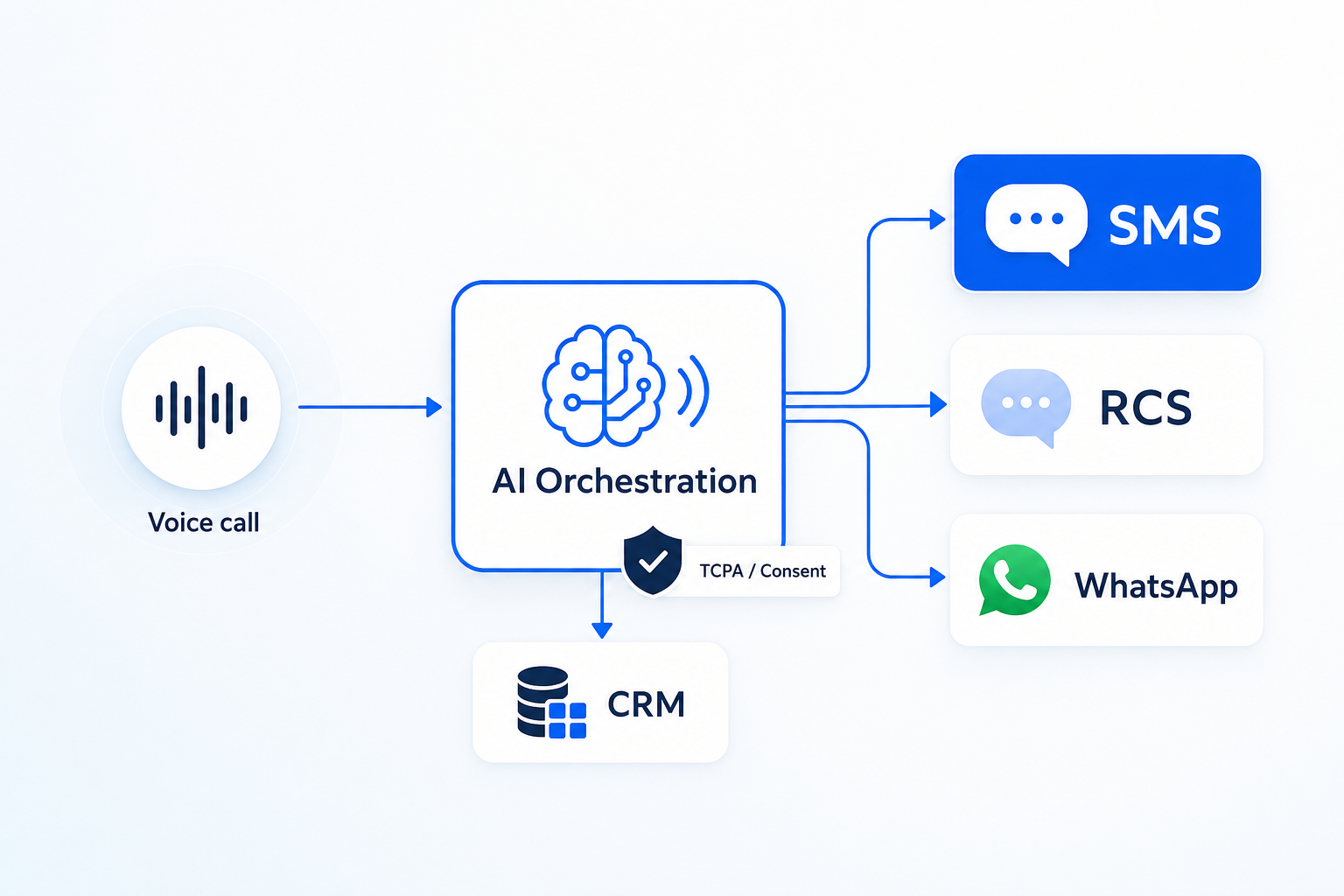
- Compliance workflows: opt-in, opt-out, consent tracking, suppression lists
- Routing: send conversations to the right person or queue
- Templates + variables: consistent messages with personalization
- Integrations: CRM, scheduling tools, forms, eCommerce
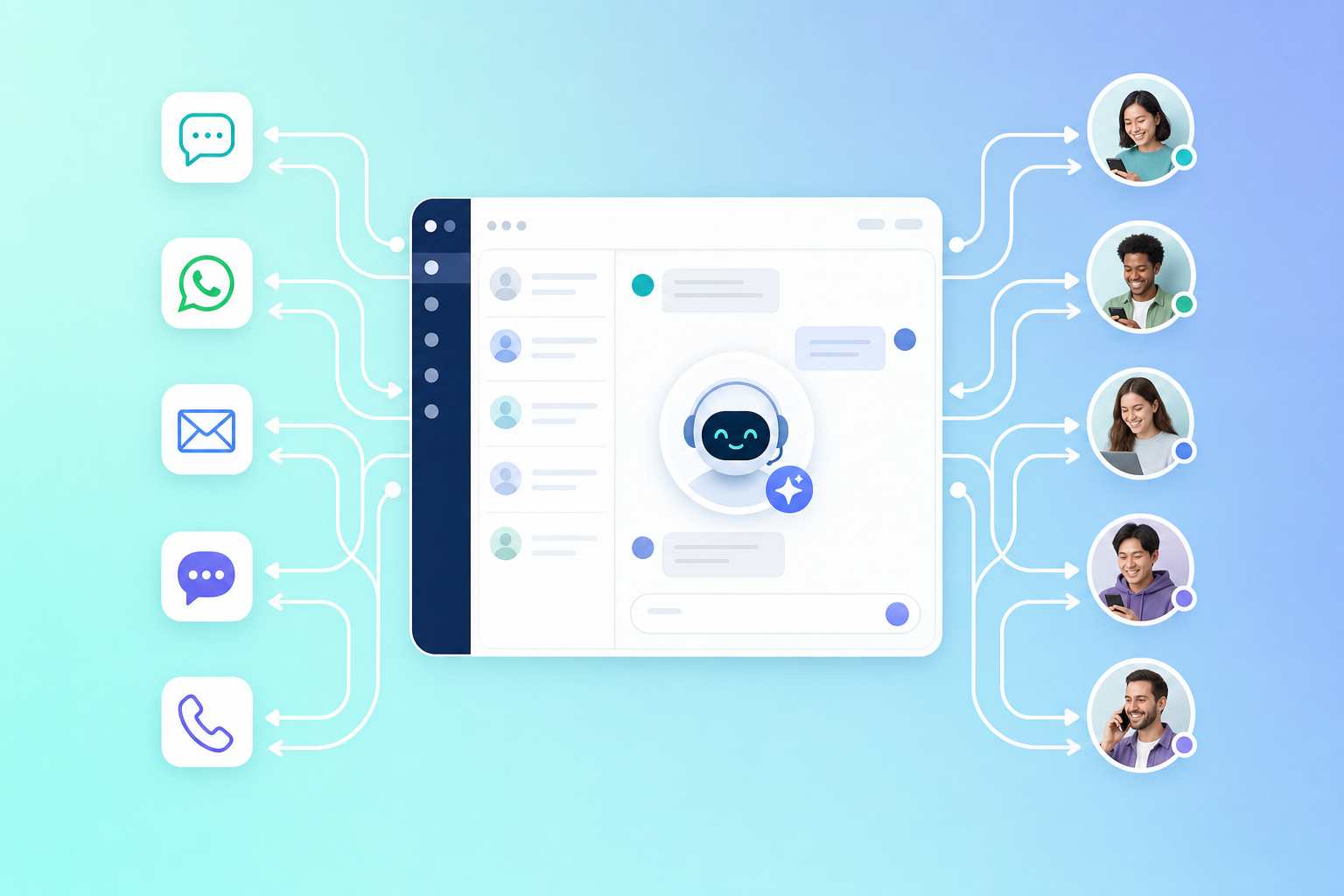
- Multi-channel messaging: when it makes sense to add WhatsApp, RCS, or email for specific segments
Actionable takeaway: Start with two automations only—(1) lead response and (2) appointment reminders. Run them for 30 days, then expand into reactivation and loyalty.
Metrics That Matter (and the Reporting Mistakes to Avoid)
Small businesses often measure SMS like email (open rates, vanity engagement). In 2026, focus on operational outcomes.
Core SMS KPIs for small business
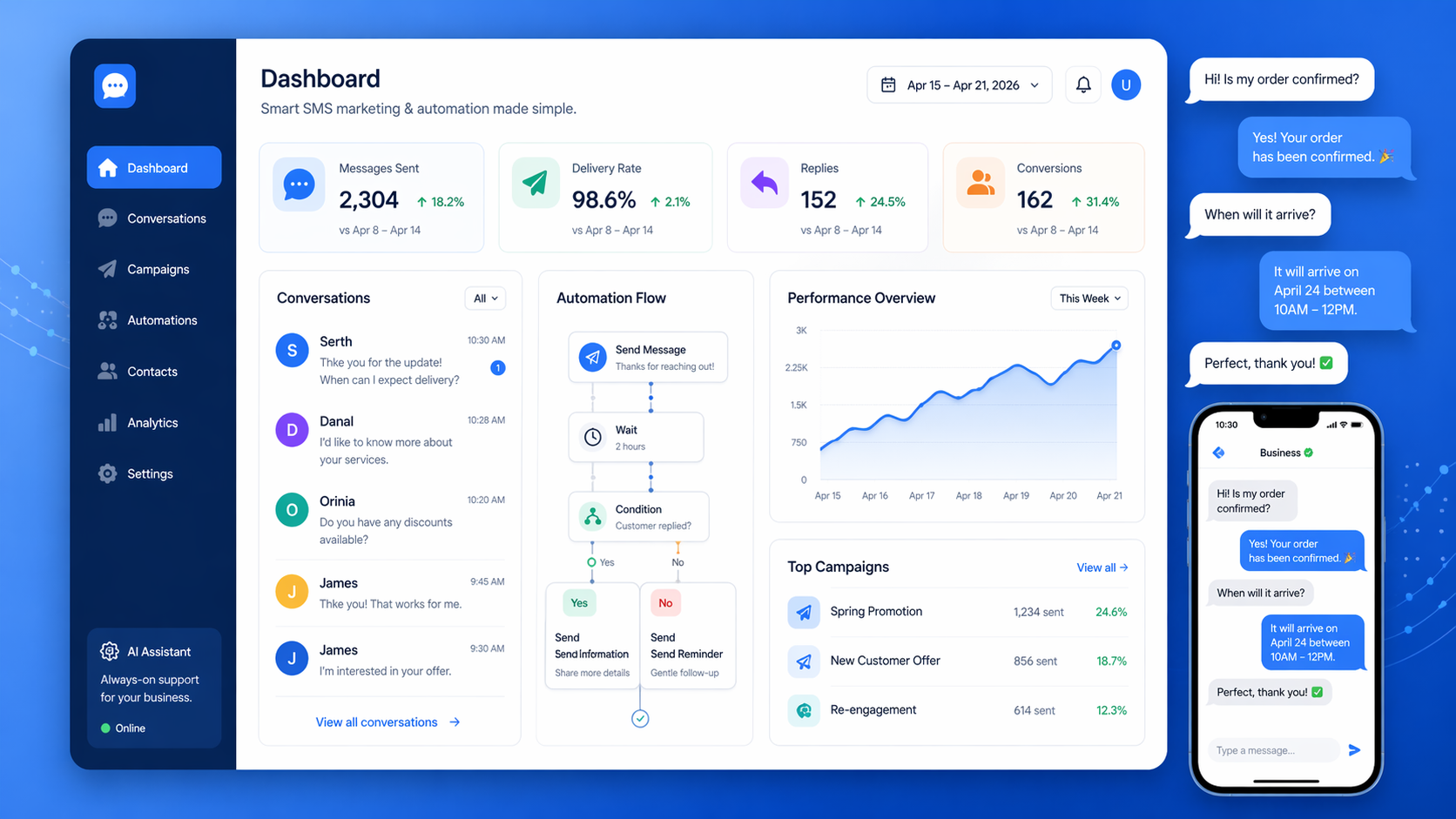
Track these consistently:
- Opt-in rate (by source: web, POS, keyword, booking)
- Response rate (especially for conversational flows)
- Conversion rate (booked, purchased, showed up)
- Time to first response (speed to lead)
- Opt-out rate (by campaign and by segment)
- Complaint signals (if your provider surfaces them)
Common reporting traps
- Attributing everything to the last message: SMS often accelerates a sale that would have happened later. Use consistent attribution rules.
- Ignoring segment performance: One segment can be thriving while another is churning (opting out).
- Not tagging campaigns: If you don’t label sends and flows, you can’t learn.
Actionable takeaway: Create a simple monthly SMS scorecard (one page). Review it like you would labor costs or ad spend—SMS is an operational channel now.
2026 Messaging Trends and Practical Implications for Small Businesses
You don’t need to chase every trend, but you should understand the direction of the messaging industry.
Trend 1: Conversational commerce is normal
Customers increasingly want to complete the entire journey in a message thread: questions → selection → booking/payment → updates.
Implication: Treat SMS as a “front desk,” not just a megaphone.
Trend 2: More scrutiny on consent and identity
As spam pressure increases, ecosystems respond with tighter enforcement.
Implication: Tighten list hygiene and message expectations. Build consent capture into every lead source.
Trend 3: Multi-channel messaging becomes practical
Some audiences prefer WhatsApp; some experiences are better in RCS (richer UI). SMS remains the baseline, but omnichannel is easier than it used to be.
Implication: Start with SMS, then add channels when you have a clear use case (international customers, richer product browsing, support workflows).
Trend 4: AI assistance shifts from “chatbots” to “ops acceleration”
The best AI systems reduce repetitive work: triage, routing, summaries, suggested replies.
Implication: Evaluate AI by how it improves staff throughput and customer experience, not by whether it can “replace” your team.
Implementation Checklist: Launch (or Fix) Your SMS Program in 14 Days
If you want a straightforward plan, here’s a two-week rollout that doesn’t overwhelm a small team.
- Define your top 2 goals (e.g., speed-to-lead + fewer no-shows).
- Document opt-in language (web, POS, booking) and make it consistent.
- Set up consent tracking and a process for proof of opt-in.
- Create your core segments (leads, active customers, lapsed customers).
- Write 10 templates (confirmations, reminders, promos, FAQ, reschedule).
- Build two automations (lead response + appointment reminders).
- Set frequency rules (caps by segment) and quiet hours.
- Train your staff on tone, escalation, and response SLAs.
- Tag every send/flow for reporting.
- Review weekly: opt-ins, responses, conversions, opt-outs.
If you’d like a second set of eyes on your workflows or compliance setup, you can also contact our team to talk through what “good” looks like for your specific business model.
Frequently Asked Questions
What’s the best frequency for SMS marketing for small business?
Start conservative: 2–4 promotional texts per month for most retail/service businesses, plus operational messages (reminders, updates) as needed. Let customer behavior guide you—watch opt-outs by segment and tighten frequency where needed.
Do I need separate numbers for marketing texts vs. support texts?
Not always. Many small businesses use one number to keep the customer experience simple, as long as your internal routing and response processes are clear. If your team struggles to manage volume, splitting marketing and support can help operationally.
Can I text leads immediately after they submit a form?
Yes—if your form includes clear consent to receive text messages and you record that consent. Immediate follow-up is one of the highest-impact uses of SMS because it improves speed to lead and reduces lead decay.
How do I keep SMS from feeling spammy?
Focus on relevance and control:
- Segment your list
- Use conversational prompts (“Reply YES…”) instead of constant discounts
- Set expectations at opt-in
- Provide easy opt-out and honor it instantly
Is automation risky for customer experience?
It can be if you over-automate. The safe model is: automate the first response, FAQs, and routing—then escalate to a human when intent is high or the question is complex.
Conclusion: Treat SMS Like a Revenue Channel, Not a Side Project
In 2026, SMS marketing for small business works when it’s built on permission, relevance, and operational discipline. If you capture clean opt-ins, respond quickly, and use automation to handle the repetitive work, SMS becomes a durable growth lever—one that supports sales, service, and retention without adding headcount.
See how TextConvo can help — visit textconvo.com to get started.
Author: TextConvo Team
🚀 See TextConvo in action
- 👉 Explore our Product
- 👉 View real Use Cases
- 👉 Contact us to get started
Tags